
SAP IBP modules for your business: which one to start with?

Ask an author
To ask a question to Natalia Morozova, click the button
In general, there are 4 core SAP IBP modules, which are the most popular choices of the companies:
- SAP IBP for Sales and Operations Planning;
- SAP IBP for Demand;
- SAP IBP for Response & Supply;
- SAP IBP for Inventory.
And 3 supplementary modules:
- SAP IBP Supply Chain Control Tower (analytics & alerts);
- SAP IBP for demand-driven material requirements planning (DDMRP methodology support, it’s a rarely used module);
- SAP IBP Maintenance Repair Operations (not exactly a separate module but rather a specific content & configuration pack for core modules functionality).
When you’re thinking of implementation you might have a question: “Which business process and module should I begin with?”.
In this article, we will share our 5+ SAP IBP implementation projects experience.
The general recommendation would be that SAP IBP for Sales and Operations Planning should be implemented the first or the last. Technically SAP IBP for S&OP license is needed to run any SAP IBP module and the main question is: is your company ready for Sales & Operation Planning business process implementation in full?
Our customer, a major cheese producer wanted to redesign business processes for further S&OP implementation. The company already had an S&OP business process, partially supported by SAP APO functionality, and decided to replace SAP APO with SAP IBP. As they were quite mature in tactical and strategic planning, we performed redesigning both for SAP IBP for S&OP and SAP IBP for Demand simultaneously. The business was ready to implement these 2 modules at once: the first one for Sales and Operations Planning workflow automation, and the second one for advanced forecasting techniques usage to improve demand forecast quality.
But in case there’s no mature S&OP process, it’s easier for the company to begin with other modules.
Our other client, a poultry producer with 18+ plants had mainly a push production business process and S&OE (Sales & Execution Planning) instead of classical S&OP. So, they got benefit from SAP IBP for Response & Supply implementation for their production & deployment planning and increased production margin. After the implementation was finished, the company was ready to start discussing S&OP topics.
Sometimes the module choice is done based on primary business needs. A major automotive parts producer stated that inventory optimization is the 1st priority for business and they wanted a quick win with fast ROIs. The company had make-to-order processes and received ready-demand program from their clients, so the implementation of S&OP would require a long way of business process and mindset transformations. That’s why we moved directly to SAP IBP for Inventory implementation.
Another case when we started with SAP IBP for Demand implementation was with a major Agro Holding. The business need was to improve the forecast accuracy using advanced algorithms and to have a sales history cleansing tools and demand influencing factors consideration. SAP IBP for S&OP module came as the second echelon on top of the improved forecast.
So, how to choose the most suitable SAP IBP module for your business? Here are some practical key points on how to make the decision:
- S&OP maturity. Try to understand at what stage your company is (see article S&OP do and don’ts) and evaluate the readiness for changes.
- Business aims. What is the main priority for your company in the next 6-12 months? Try to write down 1-3 measurable KPIs. Compare with the benefits that each SAP IBP module brings.
- Budget and Resources. One of our customers, a metal door manufacturer, implemented all core modules at once in 6 months (Yes, it’s possible!). But it was realistic only because there was enough budget and consulting resources and the best practice approach was used.
- Motivation and availability of business. Do you have a Champion in your Company, who will drive the changes? Is the project sponsor motivated to make the game change or only a small step-by-step approach is possible? You should also evaluate the availability of business users for taking part in the project. It should be not less than 20-30% of their working time.
- Integration efforts and data quality estimation. The more modules you implement, the more cutover activities you will have for data quality checks and the more effort for interface setup. In the example, mentioned above, the Customer was able to implement all core modules in parallel because SAP S/4 HANA was in place and the standard integration tool SAP CI-DS could be used.
And, of course, the best way to build an optimal implementation roadmap is to have a couple of meetings with experts, so don’t hesitate to contact Dr. Natalia Morozova - morozova@teamideagroup.com.
Also, if you need to dive deeper into each SAP IBP module or our implementation experience – let us know and we’ll issue additional articles on those topics.
Read more
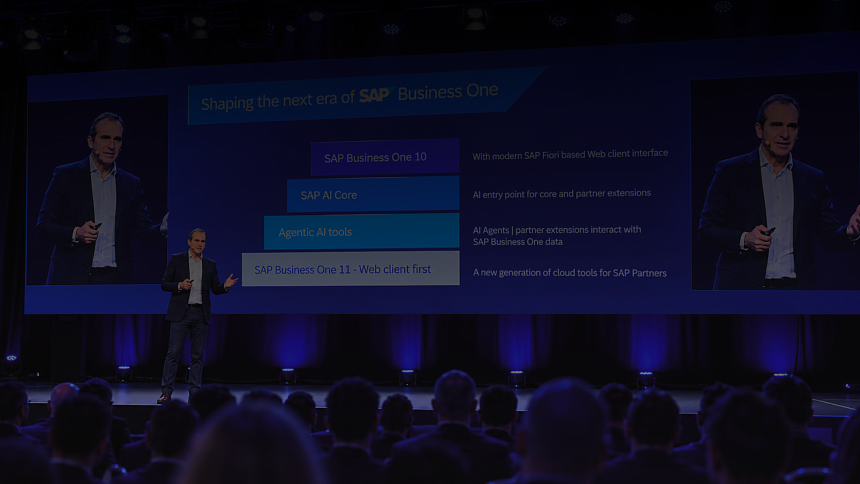
TIGROUP at SAP Partner Summit 2026: Business AI, Autonomous Enterprises and the Future of SAP
TIGROUP attended SAP Partner Summit for EMEA and MEE 2026 in Amsterdam on October 19–21, joining the SAP partner ecosystem to explore Business AI, enterprise technology roadmaps and new opportunities for digital transformation. The event brought together SAP leaders and partners to discuss how technology, collaboration and innovation are shaping the next generation of enterprise operations.


Simply About Simplification: 7 Hints not to Ignore When Moving to SAP S/4HANA
Your colleagues and associates from TIGROUP have prepared some simple tips for you. Don't forget to do this, take the right steps and always keep in mind these simple practical things that will help you migrate to new SAP cloud solutions with minimal costs.


How SAP’s Cloud Changes the Project During Transition
Transition from traditional SAP ERP system to SAP S/4HANA is no longer merely a technical upgrade. It represents a strategic shift toward a cloud-based operating model and fundamentally different implementation approaches. And in this strategic transition, your colleagues and friends from TIGROUP are ready to help you to make it as comfortable and cost-effective as possible.